


What Is Printer Toner?(Simple Guide for Laser Printing)
What Is Printer Toner?(Simple Guide for Laser Printing)
Printer toner can feel a bit mysterious if you’ve only ever dealt with inkjet cartridges. But once you understand what it is and how it works, a lot of the confusion clears up — and your printing choices get a whole lot easier.
What Is Printer Toner, Exactly?
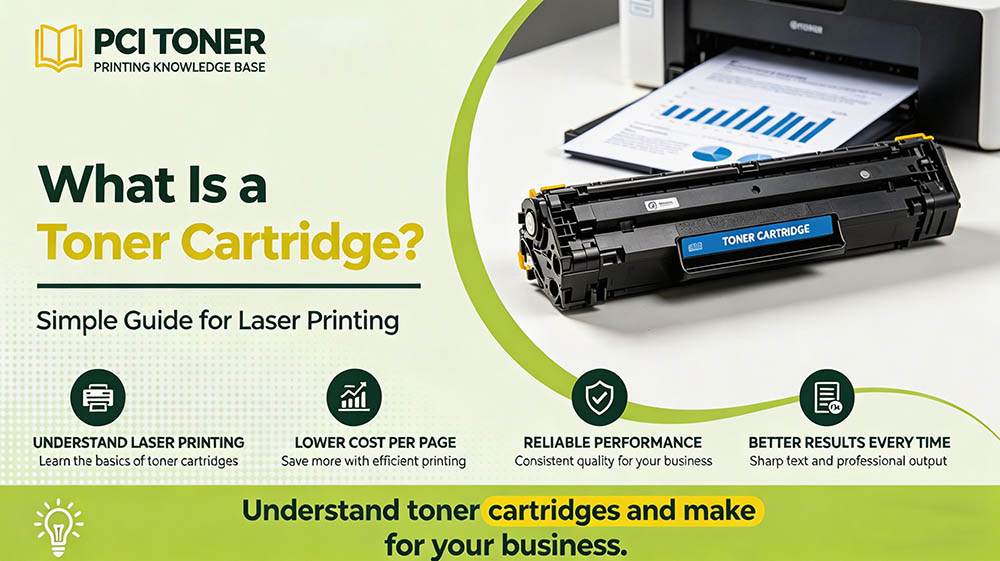
Toner is a fine, dry powder. That’s the simple part. Instead of liquid ink, laser printers and copiers use this powder to form text and images on a page. It lives inside a toner cartridge, waiting until the printer calls it into action.
Most toner blends a few key ingredients: plastic particles (for melting and bonding), carbon (for that deep black colour), and various pigments or colouring agents. The formula is engineered so that prints come out smudge-resistant and long-lasting — not something you can say for every inkjet print.
For anyone running a busy office or printing in volume, toner’s combination of speed, sharpness, and durability is hard to beat.
How Toner Works Inside a Laser Printer
Laser printing sounds high-tech, and it is — but the process itself is fairly straightforward once you picture it.
First, a laser beam draws an electrostatic image onto a rotating drum inside the printer. The drum then rolls through the toner supply. Because the toner particles carry a charge, they cling only to the laser-traced areas on the drum. Next, the paper slides past, and the drum transfers the toner onto it. Finally, the page passes through a fuser unit — basically a pair of hot rollers — that melts the plastic in the toner and fixes it permanently to the paper.
All of that happens in moments, which is why even basic laser printers can churn out crisp pages at speed. The precision of the laser keeps text sharp, while the fusion step makes the result resistant to smudging and fading.
Toner vs Ink: Not Just a Different Cartridge
If you’ve ever wondered why you’d pick one over the other, it comes down to a few core differences. Toner is powder; ink is liquid. Toner cartridges go in laser printers, ink cartridges in inkjets. And the way they end up on paper is nothing alike.
Ink soaks into the paper, which can leave it vulnerable to smears, especially if it gets damp. Toner sits on top of the paper, fused in place. That makes laser prints far more durable.
Then there’s the practical stuff. Toner doesn’t dry out if the printer sits idle for weeks. Ink cartridges can and do. Toner cartridges also tend to print a lot more pages before running empty. Yes, they usually cost more upfront, but the cost per page often drops significantly once you get into steady use. If you’re printing mainly text, reports, or documents in large batches, toner almost always wins on value over time.
What People Mean by a “Toner Printer”
Just so we’re clear: a “toner printer” is just another name for a laser printer. These machines use that powdered toner and a laser-driven drum to produce prints. They’re not spraying liquid around like an inkjet. That dry, heat-fused process is what gives laser prints their crisp look and speed.
Because they’re built for volume, toner printers tend to be workhorses. Offices favour them. So do schools, print shops, and anyone tired of constantly swapping cartridges. Maintenance is generally low, and the output is consistent — page after page.
What Goes Into a Toner Cartridge
The powder inside a cartridge isn’t just ground-up plastic. It’s carefully formulated. Plastic makes up the bulk, because it must melt smoothly during fusing. Carbon delivers rich black, while coloured toners use specific pigments for cyan, magenta, yellow, and so on. Additives help with flow, charge control, and keeping the particles from clumping.
Different brands tune their toner blends to match their printer designs, but the goal is always the same: clean edges, solid fills, no mess.
The Three Types of Toner Cartridges
Walk into any supplier, and you’ll bump into three terms pretty quickly: OEM, compatible, and remanufactured.
-
OEM (Original Equipment Manufacturer) cartridges are made by your printer’s own brand. You’ll get guaranteed compatibility and top-tier quality. The downside is the price.
-
Compatible cartridges are brand-new units made by a third party. They’re built to fit and work just like OEMs but typically cost less. Good ones can perform extremely well for everyday printing.
-
Remanufactured cartridges take an original empty shell, clean it, replace worn parts, and refill it with fresh toner. They’re the eco-friendly pick — and the most budget-friendly — but quality depends heavily on the remanufacturer’s standards. A poorly remanufactured cartridge can leak or fail early; a well-done one is practically indistinguishable from new.
Which you choose comes down to what matters most: brand peace of mind, up-front savings, or keeping cartridges out of landfills. Sometimes you can have all three.
Why Toner Makes Sense for So Many People
Toner’s big advantages are straightforward. Prints come out sharp and stay smudge-free. Pages don’t curl or wrinkle from wet ink. A single cartridge can churn out thousands of pages, so you replace it far less often. That’s why businesses, schools, and anyone with regular print loads lean toward laser.
Home offices benefit too. If you print a handful of pages most days, toner won’t dry up between uses. And you won’t find yourself scrambling to buy cartridges every few months.
Where Toner Printers Really Shine
High-volume environments are the natural home for toner. Law firms, accounting offices, university departments, copy centres — anywhere the printer runs non-stop, a laser just hums along. The precision also makes it ideal for things like forms, barcodes, and small-print contracts that need to stay legible.
At the same time, modern colour laser printers handle graphics and marketing materials surprisingly well. Photographs won’t match a high-end inkjet, but for charts, flyers, and presentation handouts, a colour laser gets the job done and won’t smudge on the way to the meeting.
Thinking About Cost, Yield, and Efficiency
Yes, the sticker price on a toner cartridge can sting. But step back and look at cost per page. When a single black toner cartridge yields 5,000, 10,000, or even 20,000 pages, the math shifts. Add high-yield options into the mix, and your running costs keep dropping. For anyone printing hundreds of pages a week, toner almost always pays for itself over time.
There’s also the time factor. Changing cartridges less frequently means less interruption. And because toner doesn’t clog or dry, you waste fewer supplies on cleaning cycles and reprints.
The Environmental Side: Recycling and Remanufacturing
Toner cartridges don’t have to end up in a landfill. Many manufacturers run free return and recycling programmes. Remanufactured cartridges take this further: each one represents a saved shell, less new plastic, and a smaller carbon footprint. If you go that route, just stick with reputable suppliers who actually test their products. A decent remanufactured cartridge performs just as well and sends exactly nothing new into the waste stream.
Handling and Storing Cartridges
Replacing a toner cartridge is usually tool-free and takes a minute or two — just follow the printer’s guide. When you store a spare, keep it somewhere cool and dry, away from direct sunlight. Heat can ruin the toner powder, and humidity can cause clumping. Also, lay cartridges flat and avoid shaking them too much unless the instructions say otherwise.
So, Toner or Ink — Which One Fits You?
There’s no universal answer, but a few rules of thumb help. If your printing is mostly black-and-white documents, high-volume, or needs to last without fading, go toner. If you print vivid photographs regularly, or your print volumes are low and sporadic, an inkjet might do the trick — just be prepared for occasional dried-out cartridges.
For mixed-use small offices, a colour laser printer often hits the sweet spot. You get fast, durable documents and decent colour when you need it, all with less fuss.
The Short Version
Printer toner is the dry powder that makes laser printing possible. It’s durable, cost-efficient for volume, and produces clean, smudge-resistant pages. With options ranging from OEM to remanufactured, there’s a cartridge for almost every budget. And once you match the right toner setup to your actual printing habits, you’ll wonder why you ever put up with anything less.


